시작한 이유
누구나 어릴 때 보도블록의 특정 무늬나 색만 밟으며 걸어 본 기억이 있을 겁니다. 금 간 블록은 피하고, 무늬 있는 블록만 골라 밟으며 한 칸씩 나아가던 그 놀이 말입니다.
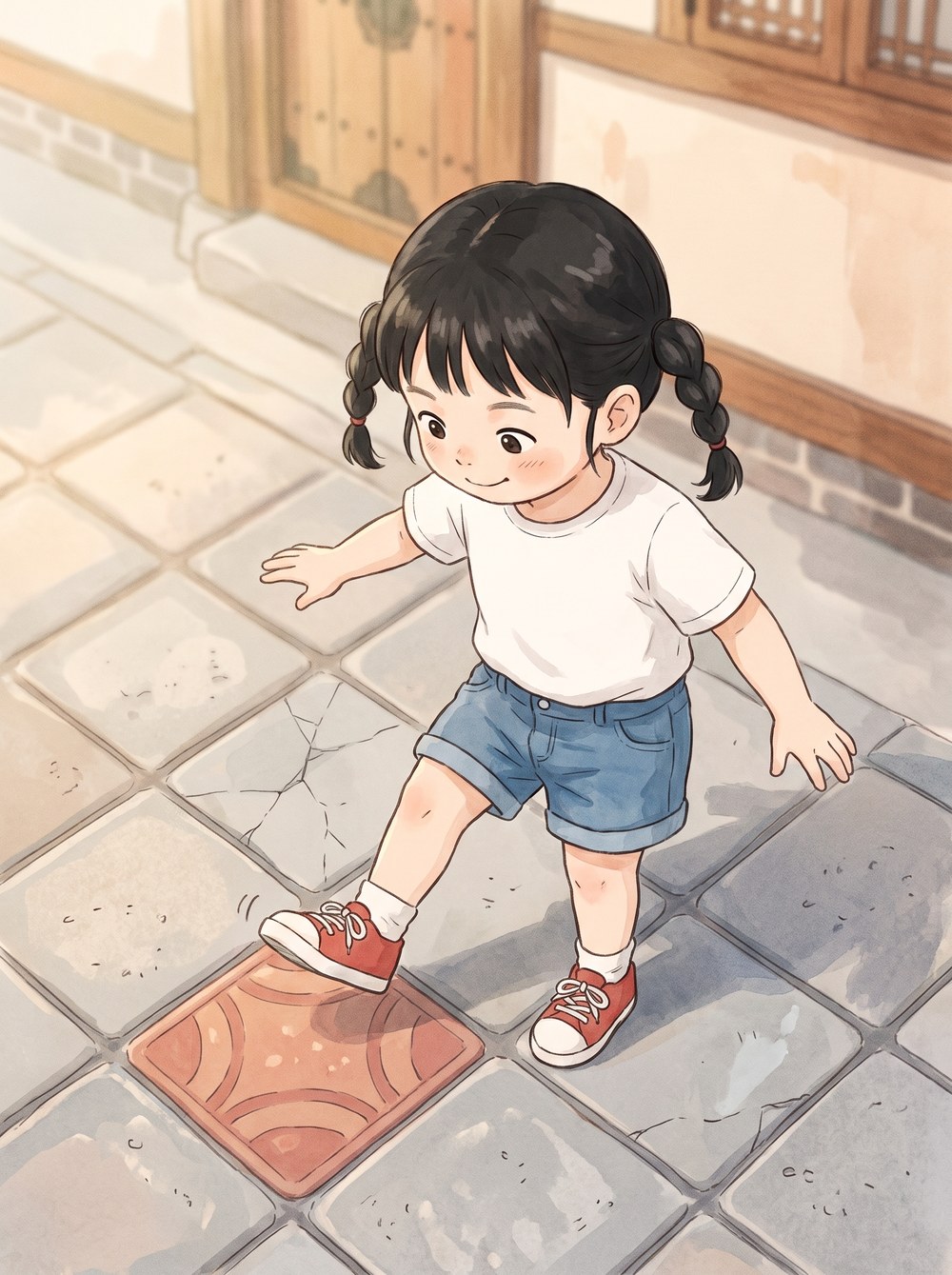
얼마 전 조카와 함께 길을 걷다가, 그 아이가 똑같은 걸 하고 있는 모습을 봤습니다. 누가 시킨 것도 아닌데 혼자 바닥을 보며 블록을 골라 밟고 있었습니다. 그 모습을 보는 순간, 잊고 있던 제 어릴 적 기억이 그대로 되살아났습니다.
그 조카는 내년에 초등학교에 입학합니다. 학교 가는 길을 그 아이가 이미 좋아하는 놀이로 채워 주고 싶었습니다. 그렇게 보도블록을 골라 밟으며 학교까지 걸어가는 게임이 시작됐습니다.
왜 무한 러너가 아니라, "학교까지 3km"인가
이 게임은 원래 흔한 무한 러너로 시작했습니다. 하지만 만들면서 계속 걸리는 게 있었습니다 — 아무리 잘해도 결국 죽는 게임이라면, 그 끝에는 아무것도 남지 않는다는 것. 그래서 방향을 바꿨습니다. 목적지를 정하고, 도착하면 판이 끝나는 게임으로.
학교까지 거리는 3km로 정했습니다. 잘 달리면 3분 34초, 보통은 4분 반 정도 걸립니다. "세션은 3분 이내"라는 원래 목표를 넘어서는 길이지만, 도착했을 때의 성취감을 위해 그 길이를 그대로 두기로 했습니다. 죽으면 처음부터 다시 — 그래서 완주는 늘 새로 얻어내야 하는 것입니다.
골목 그림 한 장이 하는 일
배경을 만들 때 두 번 실패했습니다. 처음엔 나무·전봇대·화분 같은 길가 소품을 3D로 세워 봤는데, 배경이 손그림 수채화이다 보니 3D 모델은 뭘 만들어도 다른 그림처럼 겉돌았습니다. 두 번째로는 긴 띠 그림을 옆에 세워 흘려 봤는데, 평면 그림에는 깊이가 없어서 골목이 아니라 양옆이 막힌 복도처럼 보였습니다.
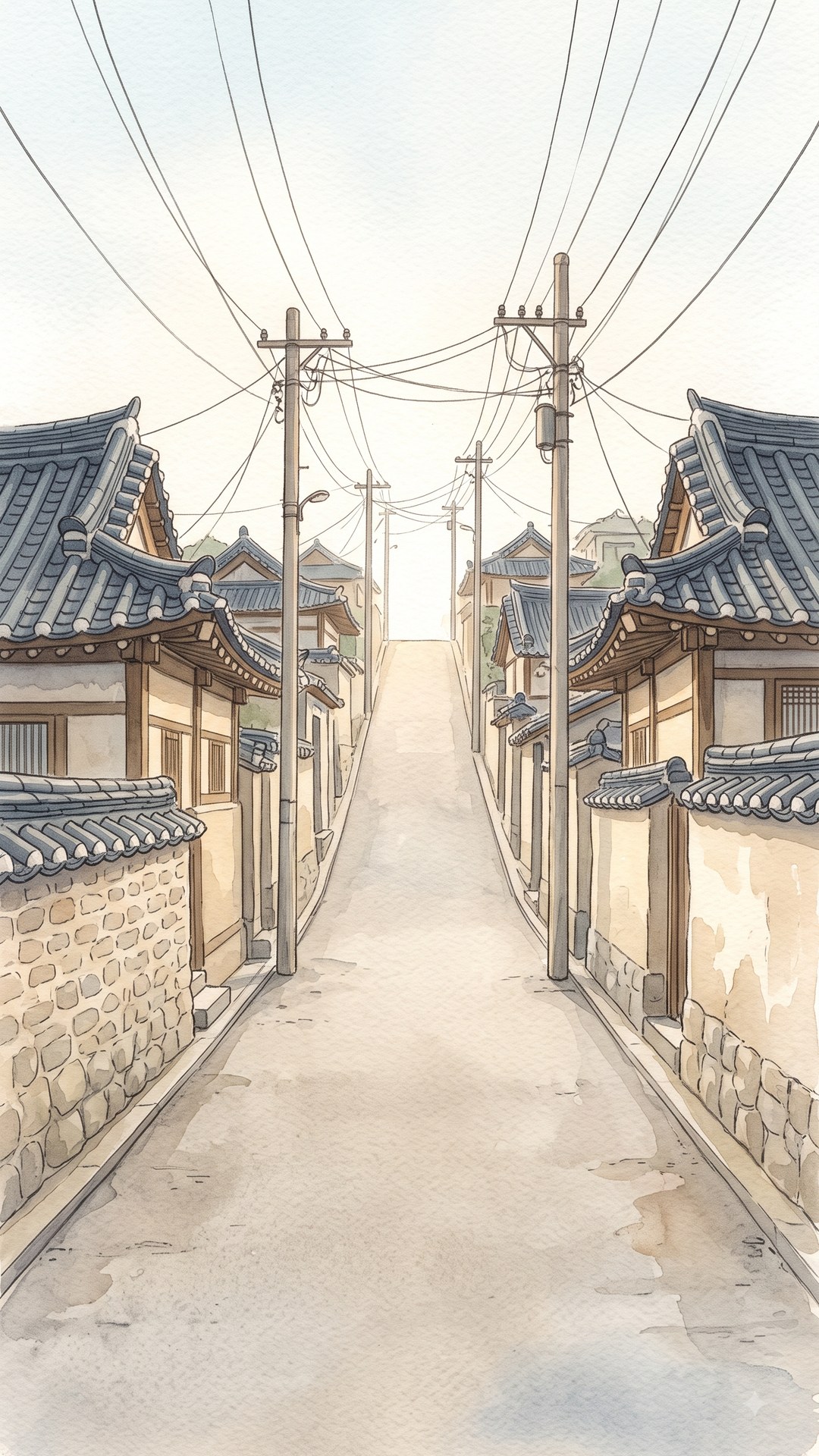
결국 답은 정지된 그림 한 장이었습니다. 화면 전체를 채우는 손그림 배경 하나가, 움직이는 3D 소품 여러 개보다 훨씬 더 "그 골목"답게 느껴졌습니다. 지금 보이는 언덕길도 몇 번의 원화를 거쳐 나온 그림입니다.
어떻게 끝나느냐에 따라 다른 결말
이 게임에서 게임오버는 한 가지가 아닙니다. 에너지가 바닥나거나, 물웅덩이에 빠지거나, 골목을 오가는 동네 강아지와 부딪히거나 — 각각 다른 이유로 판이 끝나고, 그때마다 다른 짧은 엔딩 영상이 나옵니다. 그리고 학교에 도착하면, 완전히 다른 결말이 기다리고 있습니다.
코스튬 콘셉트
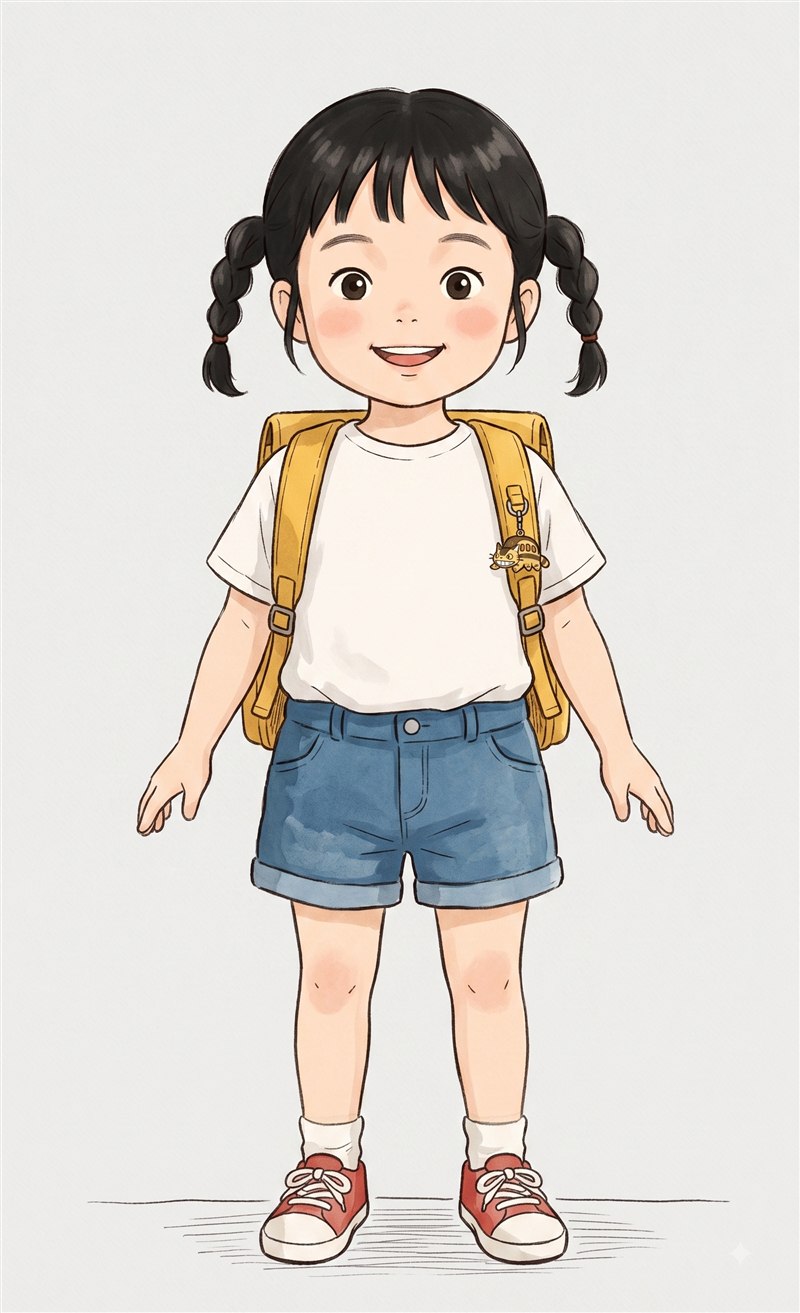
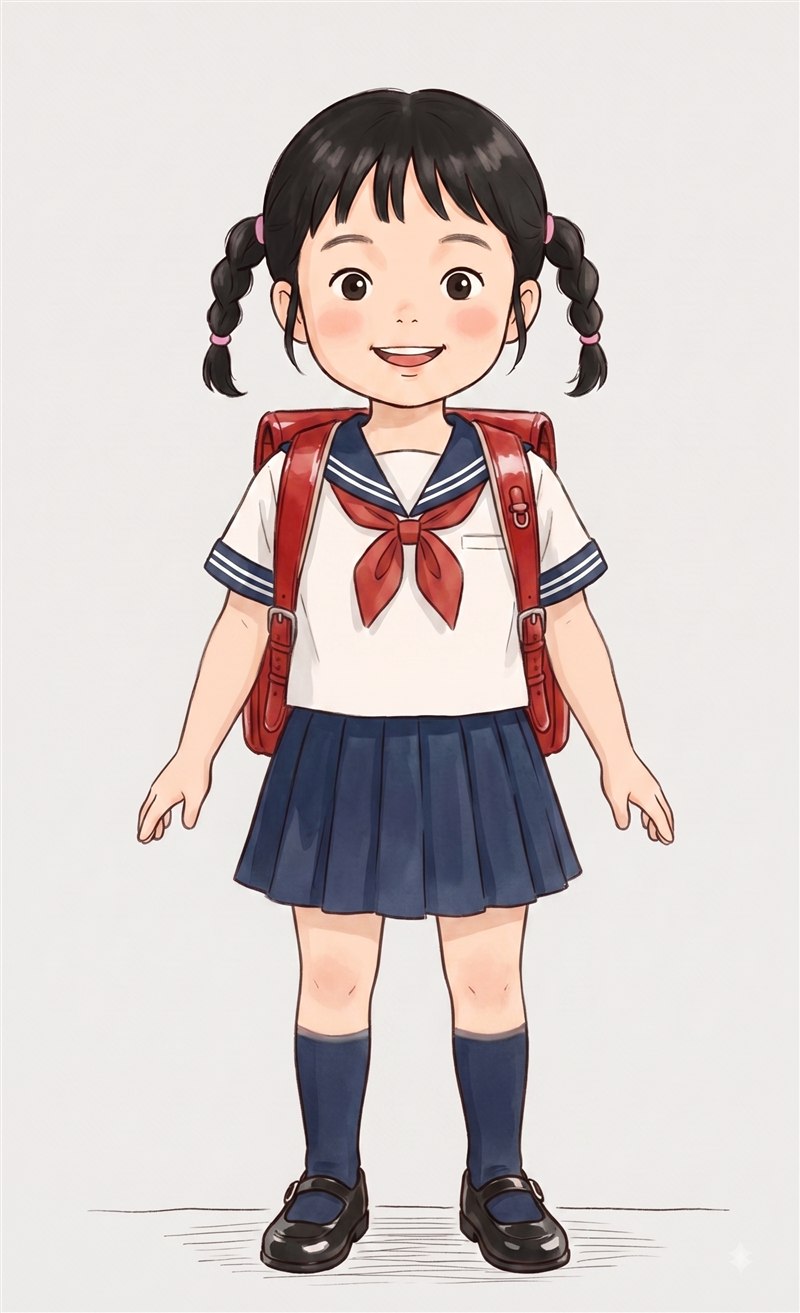
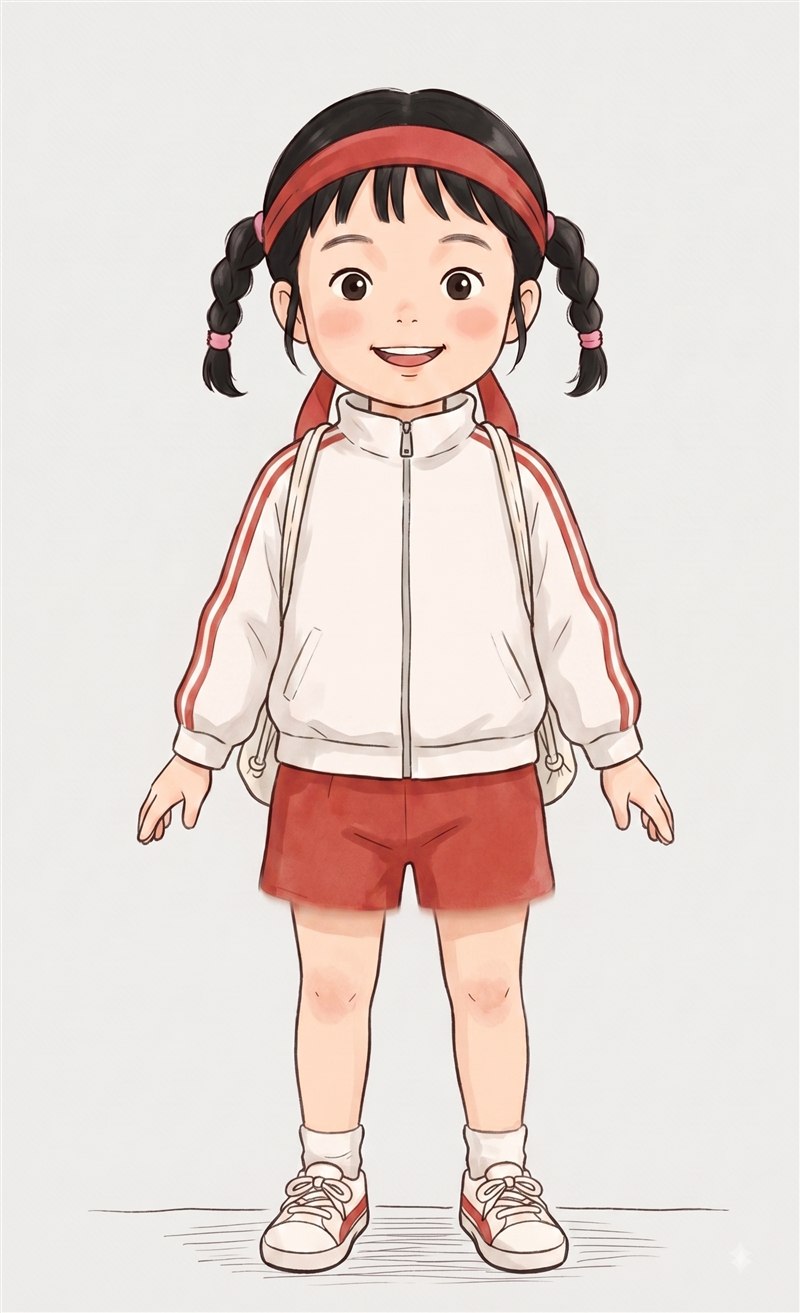
기본 캐릭터부터 시작해, 교복과 체육복까지 — 코스튬 하나하나가 완전히 새로 그린 원화에서 출발합니다. 옷 모양이 실제로 달라야 진짜 다른 코스튬이라고 생각했기 때문에, 색만 바꾸는 방식은 쓰지 않았습니다.
매일 새로 열리는 도전
일일 도전 모드는 그날의 날짜로 코스를 만듭니다. 그래서 같은 날에 플레이한 사람은 모두 같은 골목을 달리게 되고, 그날의 순위표에서 점수를 겨룹니다. 자정이 지나면 코스가 통째로 바뀌어 다시 처음부터 겨루게 됩니다.
몰겜캣의 다음 이야기
Why we started
Almost everyone remembers doing this as a kid — stepping only on certain patterns or colors of sidewalk tile, avoiding the cracked ones, picking your way forward one square at a time.
Not long ago, walking with my niece or nephew, I noticed they were doing the exact same thing — no one had taught them, they'd just started picking their way along the tiles on their own. Watching it, a memory I'd forgotten came right back to me.
They're starting elementary school next year. I wanted their walk to school to be filled with a game they already loved playing. That's how a game about stepping your way to school began.
Why "3 km to school", not an endless runner
This game started out as a fairly ordinary endless runner. But something kept bothering us while building it — if the game only ever ends in dying, no matter how well you play, nothing is ever left standing at the end. So we changed direction: give the run a destination, and let reaching it end the game in success.
We settled on 3 km to school. A great run takes about 3 minutes 34 seconds; a typical one closer to 4 and a half. That's longer than our original "under 3 minutes" goal, but we kept the distance for the feeling of actually arriving. Die, and you start over from the beginning — so finishing the run is always something you earn again.
What one painted alley does
The background went through two failed attempts. First we tried standing 3D props — trees, power poles, flowerpots — along the road, but since the background itself is a hand-painted watercolor, any 3D model looked like it belonged to a different picture. Second, we tried stretching a long painted strip along the sides, but a flat painting has no depth, so instead of an alley it read like a corridor closed in on both sides.
In the end, the answer was one still painting. A single hand-painted backdrop filling the whole screen felt far more like "that alley" than any number of moving 3D props ever did. The uphill street you see today is the result of several passes at that painting.
How you finish decides the ending
Game over isn't just one thing here. Running out of energy, falling into a puddle, or bumping into the neighbourhood dog that wanders the alley — each ends the run for a different reason, and each plays its own short ending clip. Reach the school gate, and a completely different ending is waiting.
Costume concept art
From the base look to the school uniform and the PE kit, every costume starts from a fully new piece of concept art. We decided early on that a costume should actually look different, not just be a recolor — so recoloring was never on the table.
A new challenge every day
Daily Challenge builds its course from the date itself, so everyone who plays on the same day runs the exact same alley and competes on that day's leaderboard. Past midnight, the course changes completely and the race starts fresh.